Liver support
Kutki and Bhumyamalaki are traditionally used to protect and support the liver.

Care for the body's great cleanser
R319.00
Earn 319 reward points Join free
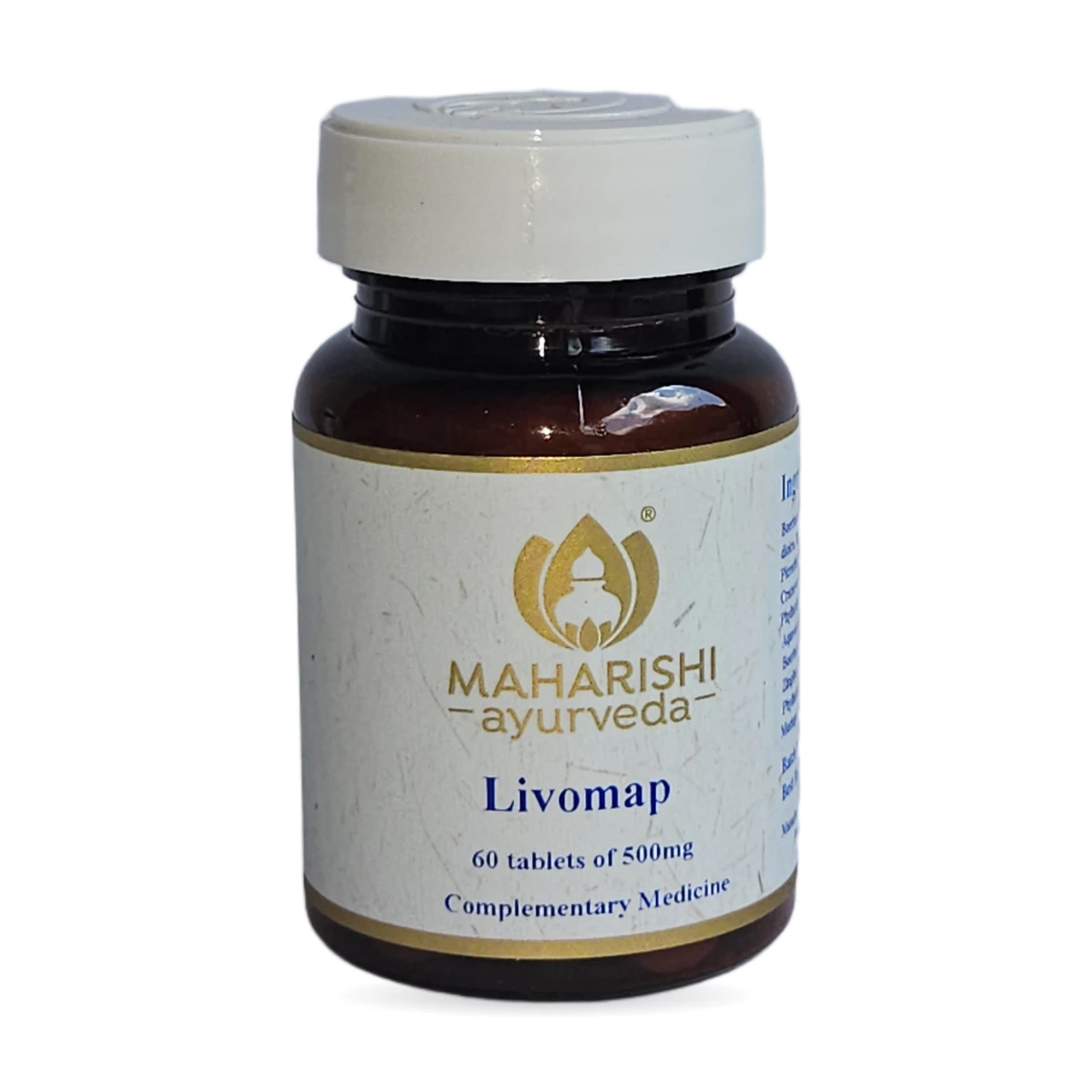
Livomap is a fourteen-herb liver formula with Kutki, Bhumyamalaki, Punarnava and Guduchi, traditionally used in Ayurveda to support healthy liver and spleen function, digestion and natural detoxification.
Overview
In Ayurveda the liver is the home of Pitta and the engine of transformation, turning food into fuel and clearing what the body does not need. Livomap gathers fourteen bitter, cooling herbs traditionally used to support it.
Kutki and Bhumyamalaki are Ayurveda's foremost liver herbs; Punarnava and Varuna support healthy fluid balance; Guduchi, Neem and Daruharidra cleanse and cool; and Sharapunkha and Wormwood are traditionally used for the liver and spleen. Each herb is included both as powder and as an aqueous extract.
Why people choose it
Kutki and Bhumyamalaki are traditionally used to protect and support the liver.
Traditionally used to help the body clear metabolic waste.
A healthy liver is traditionally seen as the key to strong digestion.
Bitter, cooling herbs for heat, irritability and heaviness after meals.
Your daily ritual
1–2 tablets with water.
1–2 tablets with water.
1–2 tablets with water, up to three times a day in total.
What is inside
| Ingredient | Traditional use | Amount |
|---|---|---|
| Punarnava Boerhaavia diffusa | Traditionally used for the kidneys, fluid balance and the liver. | 55 mg6 mgaqueous extract |
| Neem (Nimba) Azadirachta indica | Bitter, cleansing herb traditionally used for the skin and immunity. | 28 mg1 mgaqueous extract |
| Patola Trichosanthes dioica | Bitter gourd traditionally used for the liver and skin. | 28 mg4 mgaqueous extract |
| Ginger (Shunthi) Zingiber officinale | Warming root traditionally used for digestion, joints and breathing. | 28 mg4 mgaqueous extract |
| Guduchi (Giloy) Tinospora cordifolia | Rasayana traditionally used for immunity and vitality. | 28 mg3 mgaqueous extract |
| Kutki Picrorhiza kurroa | Bitter root traditionally used for the liver and digestion. | 28 mg8 mgaqueous extract |
| Devadaru (Himalayan cedar) Cedrus deodara | Aromatic wood traditionally used for joints and breathing. | 28 mg1 mgaqueous extract |
| Haritaki Terminalia chebula | Revered fruit traditionally used for digestion and gentle cleansing. | 28 mg14 mgaqueous extract |
| Varuna Crataeva nurvala | Traditionally used for the kidneys and urinary comfort. | 28 mg4 mgaqueous extract |
| Moringa (Shigru) Moringa oleifera | Nutrient-rich tree traditionally used for joints and vitality. | 28 mg2 mgaqueous extract |
| Daruharidra Berberis aristata | Bitter root traditionally used for the liver, skin and healthy blood sugar. | 28 mg2 mgaqueous extract |
| Bhumyamalaki Phyllanthus niruri | Traditionally used to support the liver. | 28 mg3 mgaqueous extract |
| Sharapunkha Tephrosia purpurea | Traditionally used for the liver and spleen. | 28 mg3 mgaqueous extract |
| Afsanteen (Wormwood) Artemisia absinthium | Bitter herb traditionally used for the liver and digestion. | 28 mg4 mgaqueous extract |
1-2 tablets 2 to 3 times daily with water. Do not exceed the stated recommended daily dose. Important: Food supplements should not be a substitute for a well-balanced, varied diet, and a healthy lifestyle.Store this product out of the reach of young children.
Quantities as declared on the pack. Traditional uses are shared for interest and are not medical claims.
Ayurvedic balance
Especially suited to the doshas filled below. Others can often use it too, with a little guidance.
These products are not intended to diagnose, treat, cure or prevent any disease. This unregistered medicine has not been evaluated by SAHPRA for its quality, safety or intended use. If you are pregnant, breastfeeding, taking medication or have a medical condition, speak to your doctor or practitioner first.
You asked
It is traditionally used as part of a reset, together with light, simple meals and plenty of water.
Usually four to eight weeks, then review. Ask our therapist about your situation.
Usually, yes. Herbs can interact with some prescription medicines, so check with your doctor or pharmacist first, especially if you are pregnant, breastfeeding or managing a condition. Our therapist is happy to talk it through with you.
Ayurvedic herbs work gently and steadily. Most people take a remedy for six to twelve weeks, alongside good food, rest and a regular routine, before judging how it suits them.
Keep the container closed, in a cool, dry place away from direct sunlight and out of reach of children.

Personal advice
Dr Thirza De Jong · Mb.ChB (BE), PgD.Trop.Med.(SA), MPH (UK), MAV (SI)
Not sure whether this is right for you? Tell us a little about yourself and our Ayurvedic therapist will reply personally, usually within one working day.
Soundscape